
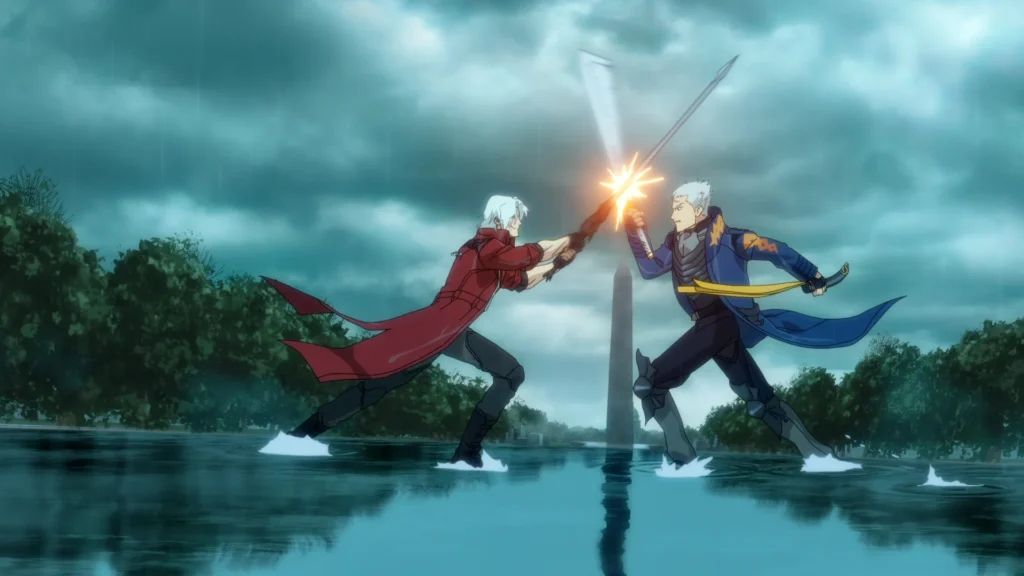
Netflix’s Devil May Cry Season 2 continues to expand the animated adaptation of Capcom’s iconic action series, and this time it does something unexpected—it draws inspiration from Devil May Cry 2, often considered the weakest entry in the franchise.
Instead of avoiding it, the series reinterprets elements from that game and integrates them into a more structured and cinematic story.
A Bigger Focus on Story and Character Conflict
Season 2 builds on the foundation set in Season 1, pushing the conflict between humans and demons into a larger, more unstable global situation.
Dante remains at the center of the story, but this season places more emphasis on his emotional distance and the consequences of his past actions. Alongside him, Lady’s role becomes more complex as she begins to question the organization she works for.
Vergil’s presence also becomes more significant, adding tension to the overall narrative and increasing the stakes for future conflicts.
Reworking Devil May Cry 2’s Elements
One of the most notable creative decisions this season is how it reuses concepts from Devil May Cry 2.
Rather than directly adapting the game, the show reinterprets its characters and ideas—especially its antagonist structure—and gives them more depth and relevance within the anime’s continuity.
Characters and plot elements that were originally underdeveloped are expanded and reshaped to better fit the darker, more serious tone of the series.
Action and Presentation
As expected from Devil May Cry, Season 2 continues to focus heavily on action sequences.
The fights are fast-paced, stylized, and designed to emphasize impact and movement rather than realism. The animation style remains consistent with the series’ energetic tone, combining traditional animation with modern effects.
The soundtrack also continues to support the atmosphere with high-intensity music during combat scenes and quieter tones during character-driven moments.
Pacing and Story Balance
While Season 2 improves on world-building and character development, it also introduces a large number of plot threads.
At times, the pacing can feel uneven as the series shifts between multiple storylines and character perspectives. Some ideas are introduced quickly and developed later, which may feel rushed in certain episodes.
However, the overall direction remains focused on expanding the universe and setting up future story arcs.
Conclusion
Netflix’s Devil May Cry Season 2 is a continuation that takes creative risks by reworking older and less popular material from the game series.
While not every element is perfectly balanced, the show succeeds in expanding the world, deepening its characters, and delivering consistent action.
For fans of the franchise, it offers a new interpretation of familiar ideas while pushing the story into a larger, more serious direction.